
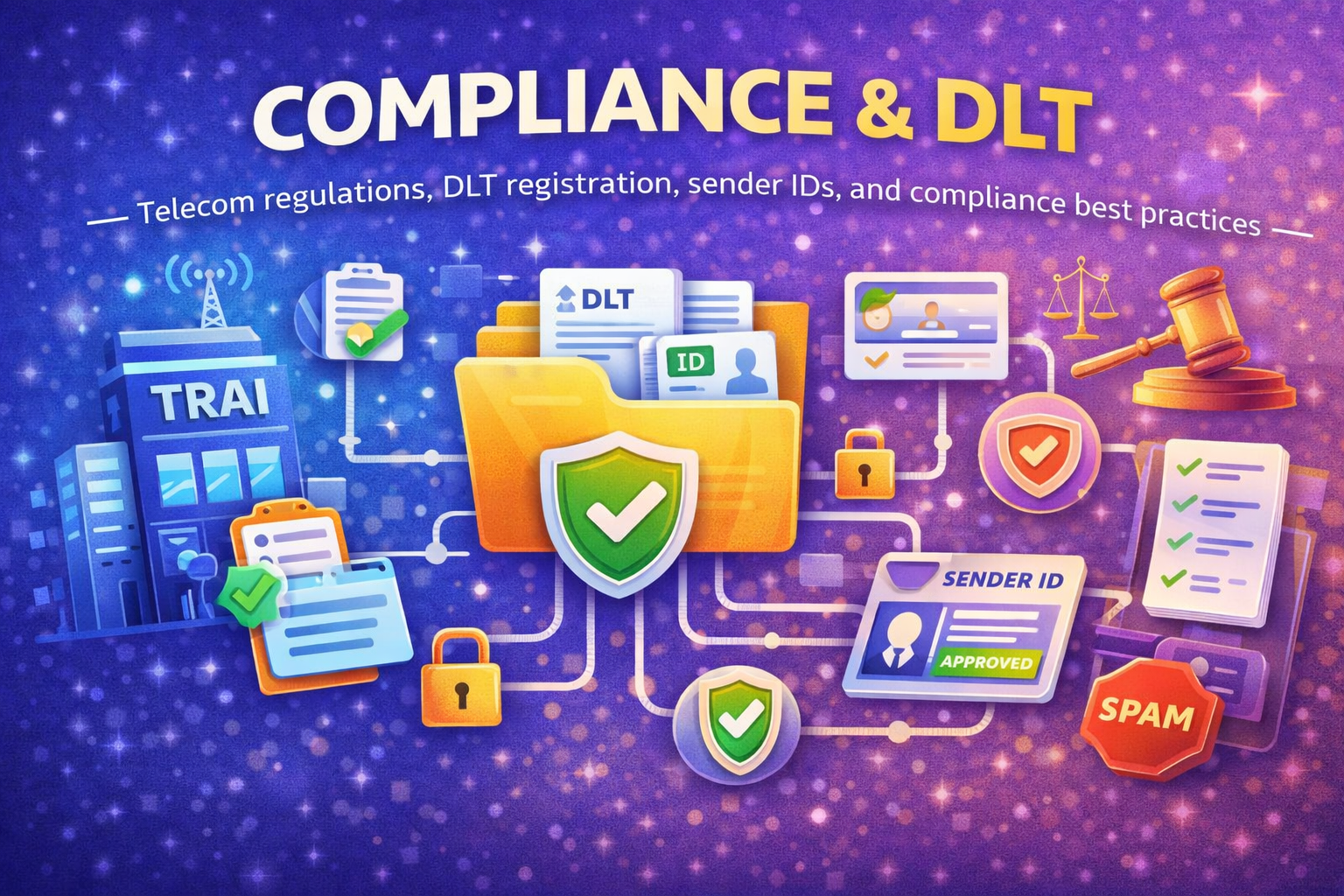
📜 What is DLT in Telecom?
DLT (Distributed Ledger Technology) in telecom is a regulatory framework introduced to control spam messages and ensure transparency in business communication.
In India, telecom operators require businesses to register on DLT platforms before sending SMS or voice communications. This system helps verify senders,
track messages, and protect users from unwanted communication.
🇮🇳 Telecom Regulations in India
Telecom messaging in India is regulated under guidelines issued by TRAI (Telecom Regulatory Authority of India). These regulations ensure that businesses follow strict rules while sending messages to customers.
Key regulatory requirements include:
- Mandatory DLT registration for businesses
- Use of approved sender IDs
- Pre-approved message templates
- User consent (opt-in) before messaging
- Scrubbing against Do Not Disturb (DND) lists
Non-compliance can result in message blocking or penalties.
🧾 DLT Registration Process
To start sending SMS or voice campaigns, businesses must complete DLT registration.
Steps involved:
- Register your business on a telecom operator’s DLT portal
- Submit business documents (PAN, GST, company details)
- Create a Principal Entity ID
- Register headers (Sender IDs)
- Submit message templates for approval
Once approved, businesses can start sending compliant communication.
🆔 What are Sender IDs (Headers)?
Sender IDs, also known as headers, represent the name or identity of the business sending messages.
Types of sender IDs:
- Promotional Sender IDs (for marketing messages)
- Transactional Sender IDs (for OTPs, alerts, updates)
Sender IDs must be registered and approved on DLT platforms before use. They help customers identify the sender and build trust.
📩 Message Templates & Approval
Businesses must use pre-approved templates for sending messages. These templates ensure that content follows regulatory guidelines.
Template categories:
- Transactional – OTPs, alerts
- Service/Utility – updates, reminders
- Promotional – offers and campaigns
Each template is linked to a specific use case and cannot be altered beyond approved variables.
⚠️ Importance of Compliance in Messaging
Compliance is critical for maintaining delivery rates and avoiding legal issues.
Benefits of compliance:
- ✅ Higher message delivery success
- 🔒 Improved customer trust
- 🚫 Reduced spam complaints
- 📈 Better brand reputation
Ignoring compliance rules can lead to message rejection or account suspension.
🛡️ Compliance Best Practices
To ensure smooth communication, businesses should follow these best practices:
- Always take user consent (opt-in) before messaging
- Use only approved templates and sender IDs
- Avoid misleading or spammy content
- Maintain proper records of customer data
- Regularly update templates as per guidelines
- Monitor delivery reports and compliance status
🔄 DLT in CPaaS Ecosystem
In CPaaS platforms, DLT compliance is integrated into messaging workflows. APIs automatically validate templates, sender IDs, and user consent before sending messages.
This ensures:
- Seamless compliance management
- Faster message approvals
- Reduced manual effort
- Scalable and secure communication
🏁 Conclusion
Compliance and DLT have transformed business messaging by making it more secure, transparent, and reliable. While regulations may seem complex, they help create a trusted communication environment for both businesses and customers.
By following DLT guidelines and best practices, companies can ensure smooth messaging operations and long-term success. 🚀