
📩 What is SMS Messaging?
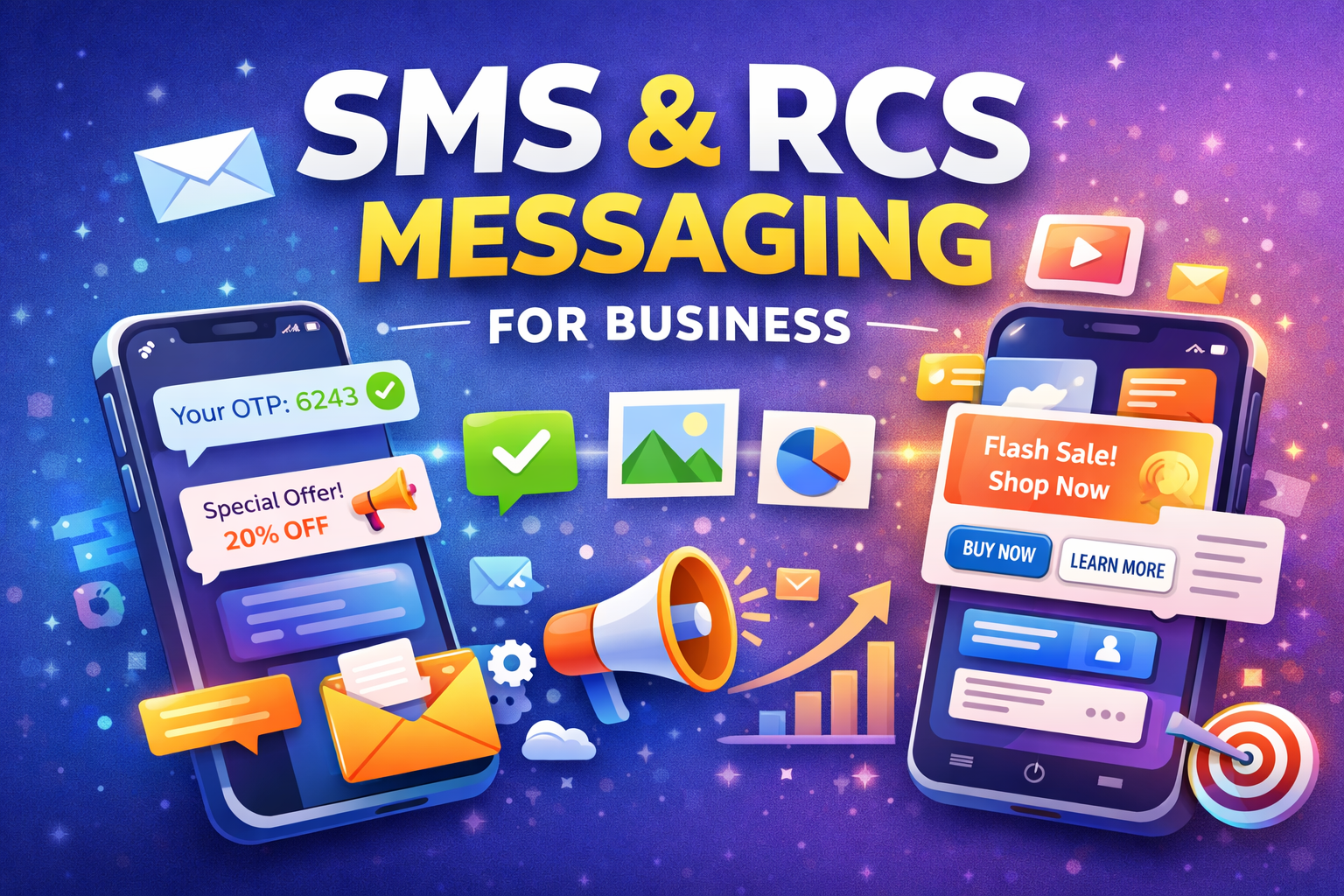
SMS (Short Message Service) is one of the most reliable communication channels used by businesses to send text messages directly to customers. It works on all mobile devices without requiring internet access, making it highly effective for critical communications.
Businesses widely use SMS for:
- OTP verification and authentication
- Transaction alerts and notifications
- Appointment reminders
- Promotional campaigns
With high open rates and instant delivery, SMS remains a core part of enterprise communication strategies.
💬 What is RCS Messaging?
RCS (Rich Communication Services) is the next evolution of SMS that enables interactive and media-rich messaging experiences. Unlike traditional SMS, RCS supports images, videos, buttons, carousels, and branded messages.
RCS allows businesses to:
- Send visually engaging messages
- Add call-to-action buttons (Buy Now, Call, Visit)
- Deliver branded communication with verified sender identity
- Enable two-way conversations within messaging
It bridges the gap between SMS and app-based messaging like WhatsApp.
🚀 Messaging Delivery & Reliability
SMS & Messaging
SMS is known for its high delivery success rate, especially for time-sensitive messages like OTPs and alerts. Messages are routed through telecom networks ensuring quick delivery.
RCS, on the other hand, relies on internet connectivity but provides enhanced user experience with real-time interactions and read receipts.
To maximize delivery performance, businesses use:
- Smart routing systems
- Delivery tracking and reports
- Failover mechanisms (RCS → SMS fallback)
🧾 Message Templates & Compliance
In countries like India, businesses must use pre-approved message templates for sending SMS. This ensures compliance with telecom regulations and prevents spam.
Types of templates include
- Transactional (OTP, alerts)
- Service messages (updates, reminders)
- Promotional messages (offers, campaigns)
RCS also follows structured messaging formats to maintain consistency and brand identity
🎯 Business Use Cases of SMS & RCS
🏦 Banking & Finance
- OTP authentication
- Fraud alerts
- Transaction confirmations
🛒 E-commerce
- Order confirmations
- Delivery updates
- Promotional offers
🏡 Real Estate
- Lead follow-ups
- Site visit reminders
- New property alerts
🏥 Healthcare
- Appointment reminders
- Reports & notifications
- Patient engagement
📊 Enterprise Messaging Strategies
To get the best results, businesses combine SMS and RCS into a unified communication strategy:
- Use SMS for critical alerts (high reliability)
- Use RCS for engagement & marketing (rich experience)
- Implement omnichannel communication (SMS + WhatsApp + Email)
- Personalize messages based on user behavior
- Track analytics for delivery, clicks, and conversions
Why SMS & RCS Matter in CPaaS
In a CPaaS environment, SMS and RCS are essential building blocks for communication APIs. They allow businesses to integrate messaging directly into applications, automate workflows, and scale communication globally.
SMS VS RCS
| Feature | SMS | RCS |
|---|---|---|
| Internet Required | No | Yes |
| Media Support | Text only | Images, videos, buttons |
| Branding | Limited | Full branding support |
| Interactivity | No | Yes |
| Reach | All mobile devices | Supported smartphones |
🏁 Conclusion
SMS and RCS messaging together create a powerful communication ecosystem. While SMS ensures reliability and reach, RCS enhances engagement through rich and interactive experiences.
Businesses that strategically use both channels can deliver better customer experiences, improve response rates, and drive growth in a competitive digital landscape. 🚀